Call Today
801-602-2784
I make house calls and nursing home visits
    • Home
    • About Me
    • Services
      • Nursing Home Medicaid Applications
      • Medicaid Asset Protection Strategies
      • New Choice Waiver Program
      • Powers of Attorney
      • Traditional Estate Planning
      • Trusts – Irrevocable and Revocable
    • Contact
    • Testimonials
    • Home
    • About Me
    • Services
      • Nursing Home Medicaid Applications
      • Medicaid Asset Protection Strategies
      • New Choice Waiver Program
      • Powers of Attorney
      • Traditional Estate Planning
      • Trusts – Irrevocable and Revocable
    • Contact
    • Testimonials
How To Pay.

First, I can assure you most families have no idea how they will pay a huge nursing home bill every month. It isn't something you plan for. We all think we will live out days at home, have a brief illness and then die in our beds with loved ones surrounding us. Unfortunately the statistics show a different reality: 75% of people 65 years of age will require some type of long-term care within their lifetime.

When it finally does happen, people figure they will just have to pay from their life's savings and then have family member chip in. Some get help from a long term care insurance policy they have paid on over the years, but I rarely see individuals with these expensive policies. So, not thinking they would qualify for Medicaid - because they believe they must be poor, destitute or on welfare to qualify for Medicaid, they just start spending and watch in devastation as a financial tsunami burn's through their resources. They watch their saving and checking accounts drain and then wonder if they should cash in the CD's, the IRA, sell the house, or give the money away?

All too often, I hear stories of families being forced to drain their savings, sell off their loved one's home or other assets, and then, when the well is dry, they apply for financial assistance from the Medicaid program. What I want you to know is: that process is, quite frankly, unnecessary. Armed with sound information and the right strategies, it is possible to qualify for financial assistance for long-term care without having to sell off your home or give up all your hard-earned savings.

The best advice I can give you before you make any drastic decision or pay any more money to the nursing home - is to talk to a live attorney. Someone like me, who lives in the community and knows the Utah Medicaid "system. " I have helped many people qualify for Medicaid and helped them save assets for their family. There are very few Elder Law attorneys in Utah that specialize in this area of the law - and I am one of them. You have found me - the needle in the hay stack!

So, please - just give me a Call - Really. I know some people are intimidated about calling a Lawyer - but I'm easy to talk to. I am not a "big law firm" and have tried to remove all the trappings of that image. When you call, don't be alarmed to hear "Hi, this is Tim" - because I'll be the one answering. I honestly believe you will feel much better after visiting with me. And, don't worry about "how much it costs", because there is no charge for the call. I can usually tell you right over the phone what your options are and how you can qualify for Medicaid and how best to preserve as many of your assets as possible. Then, if you want me to take the whole applications process over for you from start to finish, I will tell you exactly how much it will cost on a flat fee basis. And the good thing is, the fee you pay me will come from the money you would otherwise be paying Medicaid without benefiting from my legal services.

Following the Rules

The Utah Medicaid program and Utah Medicaid nursing home eligibility is built on set of rules - if you follow those rules, you can have the benefits. If you don't know the rules, or don't follow the rules, then you will fail to receive the benefits. You've heard "Ignorance of the Law is no Defense". My motto is: "Use the Law in Offense" to save your hard earned assets.

I have helped many clients save assets for their spouse and then for their children. I am able to do this by knowing the Utah state Medicaid laws and asset protection strategies that can be used in completely legitimate and government approved ways to get nursing home residents qualified for Medicaid.

Please, don't rely on "someone's" advice until you talk to me. I know planning strategies that work in Utah that other elder Law attorneys, estate planning attorneys and so called Utah senior planning advisors know little about. I've met many people who failed to get the right advice - and ended up paying a lot more than they needed to - because they relied on the wrong information.

Don't trust your life savings, or the health of a dear loved one to someone who doesn't know the ins-and-outs of Medicaid law. I am an experienced and trustworthy guide for nursing home Medicaid applications and eligibility matters. I am dedicated to helping my client families arrange their financial affairs to make sure their loved one can live worry free in a safe and protective environment, without the devastating worry of how it will be paid for.

WARNING! What You Read On the Internet May Not Apply To You

The Federal Government does not run the Medicaid program. That job has been delegated to the states. Each state is obligated to follow the Federal Medicaid Laws - but in reality, in implementing those laws, each state has developed its own "version" of Medicaid, meaning every state has their own set of rules, regulations, policies, and procedures. As a result, how things work in one state, might not work in another state. In Utah, those rules are set forth in a Utah Medicaid policy manual. These rules change so often they don't even publish a printed version, you can only access them online. Each month's version starts with a "What's New" section. So, if you want to keep up with the current policy and procedures in Utah, be sure to check the site often.

Bottom line, watch out if you get clicking and surfing around and suddenly find yourself reading some lawyers site in New York, Florida, California or some other state - because some of their rules and strategies don't apply in Utah.

UTAH MEDICAID ONLY. That's why the information on this site and my services are only for those who live in my local practice area along the Wasatch front - Salt Lake City, Provo area and down to St. George. I'm not trying to write to a national audience or offer advice or answers to anyone outside of Utah. My best advice if you live in a different state - is to make sure the information you are reading, is coming from an ElderLaw attorney who specializes in Medicaid law in the state of your residence. It can make a huge difference as to what planning strategies and eligibility rules are available to you.

Looking To Educate Yourself About Medicaid Eligibility in Utah?

There no question that understanding the Utah Medicaid requirements necessary to apply for Medicaid for a long term care nursing home stay is important. So, I commend you for wanting to educate yourself about the eligibility rules. I find many of my clients engage in research before contacting me.

So, how's it going?

I'll bet you have discovered many Elder Law attorney sites filled with impressive legalistic articles, blogs, faq's and video snippets trying to explain the Medicaid rules to you. There is a lot of information out there to read and analyze.

However ... it's my guess, that despite all you've been able to research, you're still confused and still have many questions. You probably haven't been able to find the exact information you need to answer your specific situation. As a result, you probably don't feel comfortable to try a Utah Medicaid application on your own. You don't know what to do next. I hear this a lot from families that finally give me a call.

Here's how I explain your circumstances:

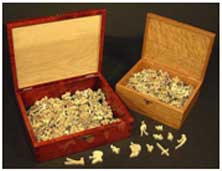
Everybody's situation presents a unique set of facts - like a box of "puzzle pieces." Usually, people have the same kinds of pieces, but rarely are they shaped the same. It's my job is to find a way to put those pieces into a picture that is acceptable to the individual, the family - and Medicaid. Unfortunatly, the simplicity of that object, is matched by its difficulty. Why? Because Medicaid is very exacting as to which picture they will accept. I'm good at arranging, removing, re-characterizing and swapping pieces. But, sometimes we're stuck with a piece that can't be fixed - or might take a while to use. But the goal, is to get started as soon as possible - while we have time to work with the pieces.

My advice:

If you aren't trying to become a Medicaid Elder Law attorney and realize you need help to figure it out for real - please give me a call so we can discuss your options. You'll feel much better after we talk.

But ....... If you really do want to learn about Medicaid, I have provided some links below that have good, in-depth information. I could have restated this information "in my own words" and then stuck them on this site to bloat my site, but really I can't improve on the informational these sites contain. So, as long as you remember that what works in one state might not work in another state, happy reading

  • http://www.law.cornell.edu/uscode/text/42/chapter-7/subchapter-XIX
  • http://www.sharinglaw.net/elder/Transmittal64.htm
  • http://www.cdc.gov/nchs/fastats/nursingh.htm
Don't Try This On Your Own
To many, Medicaid is an enigma. The program's complexity surrounding who is eligible, what services are paid for, and how those services are reimbursed and delivered is one source of this confusion. Variability across state Medicaid programs is the rule, not the exception, and adds to the confusion
2008 Congressional Research Service Report-

The part that isn't fair is, there are ways for you to qualify for Medicaid and protect a lot more of your assets than the Utah Medicaid office wants you to know about. The problem is, no one is telling you how to do it. Medicaid case workers won't tell you. In fact the Utah Medicaid policy manual specifically PROHIBITS them from advising or encouraging people to reduce income to qualify for Medicaid, or explaining legally permitted asset protection planning strategies to save a families resources.

I'm not saying the Utah Medicaid program, Medicaid of Utah or any Utah Medicaid provider is out to make applying for nursing home Medicaid an adversarial process - nor is the caseworker an adversary. However, because of the complexity and strictness of the Medicaid rules - plus knowing that it is the caseworker's job to make sure all the rules are followed with unyielding exactness - you are at a great disadvantage if you don't have a Medicaid guide who can stop you from making a mistake and tell you what to do to save resources and qualify your loved one for Medicaid benefits. The rules and the law are unyielding. You don't want to face the devastating disappointment of a denial when it could have been avoided if you had known the rules!

My point is, there are very, very few in the "system" explaining, suggesting (or even knows) what legal strategies (i.e. "loopholes") can be used to get a person Medicaid eligible and save resources for the family. To find that information, you need a Medicaid Elder Law expert who can tell you exactly what you need to do. I help people in this situation deal with the mind-boggling, complex maze of Medicaid paperwork and the frustration that accompanies it. I know where the landmines are that are placed along the way. That's why I encourage you to call me before you draw a wrong conclusion about eligibility or proceed on your own without knowing what assets could be protected.

No one "Plans" on ending up in a Nurshing Home!

Let me assure you - most families have no idea how they will pay a huge nursing home bill every month for the rest of their loved one's life. It's not something that's planned for. I have never seen a person set up a "nursing home" nest egg. We all expect to live out our days at home, have a brief illness and then die in our beds with loved ones surrounding us. Unfortunately, statistics present a different reality. That reality is - that once a loved one enters a nursing home, a devastating financial tsunami starts burning through resources. The family watches saving and checking accounts drain and then wonder if they should cash in the CD's, the IRA, sell the house, or give the money away? That's what the Medicaid caseworker will tell you to do. "Spend-down" on nursing home bills until you have less than $2,000 in assets - and only then will Medicaid be an option.

But - You don't have to spend all your assets on nursing home bills. There are things you can spend your money on that are exempt assets. There are ways to build fences of protection around family assets. You can receive Medicaid benefits - if you know how to qualify for them. Let me help you.

When Do People Call Me?

My most frequent call comes from someone who completed an application on their own and was denied coverage because they failed one or more of the eligibility rules. The call is urgent and desperate. They are completely frustrated with the Medicaid system and don't know where to turn. Gratefully someone finally gave them my name - and they are very anxious and hopeful there is something I can do to fix their problem.

As I visit with them, I find a common thread of events lead them to their crisis. They tell me it was the nursing home that sent them straight to the case worker to start a Medicaid application. They complain no one advised them it might be a good idea to first visit with someone who could review their situation and give them advice on any issues or problems they might have - and tell them ways they might protect some of their assets. But that didn't happen. They were just pointed straight to the case worker.

Then, trusting this advice, they submitted all the documents and information the case worker requested and waited for the good news. But something had gone haywire. Their application was DENIED. They didn't qualify. They can't qualify. They did something wrong and failed some eligibility rule that no one warned them about.

With discouragement, they relate how they felt alone in the system and it was anything but a helpful environment. What they found was a process fraught with complicated rules, unyielding consequences, conflicting advice, and no one telling them they had a problem and how to fix it or how they could have saved a lot of their assets for their spouse or family.

Unfortunately, I am often faced with informing them that because they filed their application without first fixing problems or first taking advantage of planning strategies that could have allowed them to save some of their assets - that Medicaid's denial has left them with very few options. I do my best to help them with what can be done - and in some cases, I can help them get eligible and maybe even salvage some of their resources. But sometimes there's just nothing that can be done.

The take away reality is, that once an application has been filed with Medicaid, and the "Decision Letter" issued, it is very difficult (and often impossible) to go back and fix it. That's why it's so important for every person applying for nursing home long term care Medicaid, to first get advice and input from an expert knowledgeable about Utah's Medicaid eligibility rules before submitting their Medicaid application.

Utah medicaid qualifications (2014)
Requirements to qualify for Utah Nursing Home Medicaid benefits:
  • At least 65 years of age or disabled.
  • Citizen of United States or an alien who has been admitted as a permanent resident.
  • Resident of Utah.
  • Medical need for nursing home care as established by completion of Form 10-A.
  • Assets of less than $2,000. The applicant's spouse may have assets not exceeding $117,240.
  • Applicant's monthly GROSS available income is not limited, however the maximum Medicaid reimbursement rate is $4,526.
  • Applicant's spouse has no income limitation.
  • Be under no disqualification period because of transfer of assets.
Assets that are not counted in the $2,000 asset limit:
  • House - if the equity in the home is less than $525,000 and the applicant intends to return home or the applicant's spouse or disabled child lives in the home.
  • Property used in trade or business.
  • One vehicle - regardless of age or value.
  • Life insurance - with no cash value (i.e. Term insurance).
  • Life insurance - with cash value - if the total face value of all policies is less than $1,500.
  • Irrevocable funeral contracts (i.e. pre-paid funeral plans).
  • $1,500 designated burial fund.
  • One burial space per family member (plot, gravesite, crypt, casket, urn, headstones, burial containers, open/closing of gravesite, endowment or perpetual care contract).
Assets that are counted in the $2,000 asset limit:
  • Checking/Savings accounts
  • Brokerage accounts, stocks and bonds
  • Certificates of deposit
  • U.S. savings bonds
  • Real property
  • Life insurance cash value if the total face value of all policies is greater than $1,500.
  • Boats, trailers, motor homes, 4 wheelers
  • Loans, Notes, Mortgages
  • Deferred Annuities
  • IRAs
  • Any resource or item of value owned jointly by the applicant with anyone else.
Countable Income:
  • Social Security
  • Pension
  • Retirement accounts
  • Annuity payments
  • Interest
  • Dividends
  • Alimony
  • Rental income
  • Life insurance proceeds
  • Long-Term Care Insurance benefit payments
Medicaid Application Process Overview

My goal is to give you a brief description of the Utah Nursing Home application process, as practiced by me on a daily basis for my client families. It is not a step by step how to, but a practical explanation of what's involved.

The long term care Medicaid application process is administered by a caseworker who is employed by the Utah Department of Work Force Services (DWFS). From point of the mountain south, down to St. George there are only 12 caseworkers (2 men and 10 women). Each caseworker is assigned a number of nursing homes to work with. Caseworkers work from home and don't have offices, but they do visit their assigned nursing homes to pick up documents and answer applicants questions as needed. However, essentially all of their interaction with an applicant is by phone .

All the documents you submit to the caseworker are bundled up and sent to a central scanning facility in Salt Lake City where they are scanned and entered into the DWFS computer system. After scanning, they are returned to the caseworker and she will tell you to come pick them up - usually at the nursing home. A caseworker doesn't review an application until it is scanned and entered into the system. A number of years ago, DWFS spent millions of dollars to create a software program to "automate" the application process. It took a number of years to develop and work out the bugs, but has now been operational for the last 2-3 years. It is now the exclusive way applications are reviewed and processed. One of the consequences of a "computerized system" is that the caseworker is required to complete every box, line, description and verification in a ridged and unyielding manner - i.e. "dot every i and cross every t."

Another consequence of the process being "automated" is the ease in which your caseworker can generate form letters covering a myriad of topics, problems, requests for more information, decisions and requests for explanations. As they go screen by screen entering information, if something is missing or incongruent or unverified, or incomplete, I think all they have to do is push a button and boom, out goes a letter - well - I don't know about a button, but they do send a lot of letters out to request additional documents or request an explanation. It would be much easier to pick up the phone and call you about it - but that's usually not the way they do it. They send you a letter. I think one of the main reasons they contact you in writing, is to keep a paper trail of their actions. Medicaid is a joint Federal State program and the state is required to follow Federal laws and is subject to audit and oversight by the Feds. But it's often frustrating and time consuming to do things through the mail.

Utah's "Medical Application for Long Term Care" is a 5 page form that requests detailed information about the applicant, the applicants spouse and in some cases other family members. The Application includes a list 18 types of records/documents ("verifications") that must be submitted with the Application. This "Check List" includes 5 years' worth of monthly bank and savings statements, 5 years' worth of investment, IRA, 401K, annuity's statements, insurance policies, a current house tax notice, copies of any Trust Agreements, funeral plans, proof of income, contents of safe deposit box, settlement papers from the sale of a house or reverse mortgage, a completed monthly budget schedule, and all other supporting documents relating to a person's assets, income and resources.

The application process is essentially a "mini-audit". They won't take less than 5 years, and while a few missing months are OK, they require complete records. Prior to 2006, only 3 years were required, but the law now is to scrutinize your finances for 5 years to determine if you made any "gifts." Clients are always surprised and frustrated by the level of detail and amount of paperwork they must gather and submit to DWFS.

Complete information must be submitted. DWFS operates under the "verification" theory - which is simply that unless a piece of paper can be produced to verify a fact or position, it can't be accepted or established. In short, a caseworker won't (and actually can't) take your "word" for it. There are exceptions, but they almost always require a piece of paper to verify a fact, statement or explanation.

Once the Application and all verifications have been submitted to the satisfaction of DWFS, the agency has 30 days to issue its eligibility determination, which it sets forth in a "Notice of Decision" letter. If your application is denied, the Notice will state the reason.

Here is a link to the application.

MEDICAID MYTHS: A Grain of Truth, but Mostly Myth
1. Myth: Only a very few, very poor people ever need Medicaid.

The Truth: The overwhelming majority of nursing home residents receive Medicaid. That's right! Over 70% of nursing home residents right now are getting Medicaid. What about the rest? They'll be on Medicaid too in 6-18 months! Think about it can we all afford $6000-$7000 per month, every month? Most folks can't and Medicaid is the solution!

2. Myth: I have to give away everything I own to get Medicaid.

The Truth: Basically, a person is permitted to own some property, and still be eligible for Medicaid. The trick comes in knowing what is "countable" and what is "non-countable" under the Medicaid rules. For example, an individual's home and automobile are exempt and not countable for Medicaid qualification purposes. In addition, certain types of prepaid burial contracts are non-countable. There are many other types of "non-countable property." The bottom line is, you don't need to be completely without assets to be Medicaid eligible.

3. Myth: I can't give anything away and get Medicaid.

The Truth: The Medicaid rules provide that a person can be disqualified for giving away property, in some cases. But, a lot depends on what is given away, to whom, and when. So, again, it's complicated. Some asset transfers are not penalized under the Medicaid rules.

4. Myth: I have to wait 5 years after giving anything away, to get Medicaid.

The Truth: The disqualification isn't always 5 years long and sometimes there is no disqualification at all. True, there is a 5-year "lookback" for some asset transfers under the Medicaid rules. This means that the Medicaid agency will look back at all transfers of property, including sales for less than market value. However, the rules penalizing transfers do not apply to all transfers. See #2 above. A change made by the Deficit Reduction Act of 2005, applies penalties going forward from the date of application when a person is otherwise eligible for benefits. This new rule requires professional assistance.

5. Myth: I can keep all my inherited property when my spouse gets Medicaid.

The Truth: When a married person applies for Medicaid, assets in either or both spouse's name are considered by the Medicaid agency, even if a pre or post-nuptial agreement is in place. However, some assets won't be "countable" and you may keep some as an asset allowance if your spouse enters a nursing home. See #1 above.

6. Myth: If I put my property into my spouse's name, I will be eligible for Medicaid.

The Truth: Assets are counted, regardless of which spouse's name they are in. However, the healthy spouse will be given several months to re-title assets from the name of the spouse in the nursing home, into the name of the healthy spouse.

7. Myth: Medicare will cover my nursing home bill.

The Truth: Medicare only covers a small amount of the nursing home care provided in this country. Many older people are surprised to learn this. In general, there are 20 days of full coverage if you go into the nursing home after at least three days in the hospital, and are getting skilled care (not intermediate level care). Then, if you still need skilled care, you can get up to 80 days of partial coverage from Medicare after you pay a daily co-pay amount. After that, you will either pay out-of-pocket, or get Medicaid, unless you have private long-term care insurance.

8. Myth: If I enter a nursing home as a private pay resident, I must use up my assets before I can get Medicaid.

The Truth: You are not required to use your assets to private pay for the nursing home care. However, some nursing homes might try to make you believe that you do have to do this. They are paid less under the Medicaid program than they collect from private pay patients. Some people seek advice from an elder law attorney to find out how they can become Medicaid eligible before having spent a significant part of their assets on the private pay rate.

9. Myth: I can only 'spend-down' my assets on medical or nursing home bills.

The Truth: See # 7 above. Nursing homes may tell you that you have to spend your savings on the private pay rate, before applying for Medicaid, but this is not true. In fact, it's against the law for them to tell you this!

10. Myth: My power-of-attorney automatically has the power to take property out of my name, if I ever need Medicaid.

The Truth: Your best tool to be able to plan for Medicaid eligibility, should you ever need it, is to sign a general, durable power of attorney that includes a "gifting" power. Your agent under the power of attorney will only be able to re-title your assets if your power of attorney contains a "power to make gifts." Most powers of attorney do not contain gifting and/or self-dealing powers. The court procedures to transfer assets without a "gifting power" can be expensive and time-consuming, and may not allow the type of asset protection that many people would like to accomplish. Without a "gifting power" your agent is generally limited to spending your money on your bills and selling your assets to generate cash, to pay your bills. A "gifting power" is recommended for people who want to become eligible for Medicaid and should not be limited to the "non-countable" assets allowed under that program.

Some powers of attorney may contain "gifting" provisions, but limit such gifting to $10,000 to $12,000 per year. This figure is too limited to do effective Medicaid planning, and is related to a completely different type of legal issue. (See #12 below, about the federal gift and estate tax.) One more word about the "gifting power." You should require your agent under your power of attorney to consult with an attorney experienced in Medicaid law before making any asset transfers.

11. Myth: All property transfers will cause me to be disqualified from Medicaid.

The Truth: Not all transfers of property will cause a person to become ineligible for Medicaid. See #2.

12. Myth: "I can give away $13,000 per year under Medicaid rules without penalty.

The Truth: This is a rule under federal gift tax law, not under Medicaid law. Right now, Utah Medicaid law disqualifies a person from getting Medicaid for one month for every $4,526 given away, in most circumstances. This disqualification starts when a person otherwise eligible for Medicaid makes application and is applied on a forward basis for all divestments in the five years prior to the date of application. So, if my grandmother gives me $15,000 in May, she will be ineligible for approximately three and one half months beginning with the date of her application if she is otherwise eligible. These matters can be worked on, but they are not as simple as they once were.

13. Myth: If my income exceeds a certain amount, I will not be eligible for Medicaid.

The Truth: A couple's total income is divided into his and hers by the "name on the check." This includes pension benefits, IRA payouts, or other income paid only to the account holder, and accessible by the spouse only if deposited in a joint account. Income the couple receives jointly is divided in half. The community spouse keeps all of his or her own income plus half of any shared income. If this total is less than the Monthly Minimum Needs Allowance ("MMNA"), then the institutionalized spouse must be allowed to supplement the community spouse's income in an amount that increases the community spouse's total income up to the applicable MMNA. If the income level of the community spouse is very low, he or she may receive all of the combined marital income. Conversely, a community spouse with a high total income may receive little or no supplementary income from the institutionalized spouse. In such a case, even if the income of the community spouse is considerable, the Medicaid program cannot require that any of it be applied toward the cost of the institutional spouse's care. Income remaining to the institutionalized spouse after he transfers the allowed amount to the community spouse is subject to the usual Medicaid post-eligibility share-of-cost requirements.

14. Myth: My income may have to be used to pay my spouse's nursing home bill.

The Truth: This is not true in Utah or the majority of states.

15. Myth: All of my spouse's income must be used to pay the bill if my spouse is on Medicaid in a nursing home.

The Truth: The law allows you to keep a portion of your spouse's income if your income is below certain limits ($1839 in 2014). In addition to this allowance, you may be entitled to a greater allowance (up to $2,676 in 2014) if the cost of maintaining your home exceeds a certain amount or if a state hearing officer or a judge orders a greater allowance.

16. Myth: I can hide my assets and get eligible for Medicaid.

The Truth: Intentional misrepresentation in a Medicaid application is a crime and can be costly. The IRS shares any information concerning income or assets you have with the state agency that administers the Medicaid Program. You or whoever applied may have to pay Medicaid back to avoid prosecution.

17. Myth: Medicaid rules that applied to my neighbor when he went in a nursing home will also apply to me.

The Truth: Medicaid rules change, so don't count on the law that applied to your neighbor still applying to you. The Deficit Reduction Act of 2005 which went into effect February 8, 2006 made significant Changes. Administrative ruler making is still catching up. Also, there may have been facts about your neighbor's situation that you just don't know. It's best to have your situation analyzed by a competent elder law attorney.

18. Myth: If my spouse is in a nursing home or may need long-term care assistance, I should leave all my money to my kids so she isn't disqualified for benefits if I should die first.

The Truth: While many individuals and attorneys have used this method of planning, due to a change in the law that went into effect October 1, 2001 and February 8, 2006, special planning is now required when your spouse receives or may require long-term care benefits after your death. This is a very complicated and emerging area of the law, so it is very important to consult with a qualified elder law attorney as soon as possible if this issue applies to you.


Tip's From My Experience
  • Don't give away any of your assets. This includes both money and hard assets (e.g. a car, motorhome, cabin).

    Medicaid looks for all transfers (gifts) made by an applicant during the 5 year period prior to application (Medicaid calls this the "look-back" period). Medicaid totals all the gifts made during this 5 year period and assesses a penalty. The penalty period is determined by dividing the total value of all the transfers made, by the "divestment penalty divisor" - currently $4,526. Thus, if an applicant or spouse gave away $60,000 over the last 5 years, a 13.26 month (60,000/4,526) penalty would be imposed. The penalty begins on the day the applicant is in the nursing home and meets all the other eligibility rules.

  • Exception to rule against making gifts: give them away at least 5 years prior to applying for Medicaid (which describes "Medicaid Pre-Planning").
  • When you put another person's name on the title to your home - you are making a gift to that person and Medicaid will apply a penalty. However, putting another person's name on a bank account is not a gift, as Medicaid will treat the account as owned by the applicant (of course if the "joint owner" withdraws cash from the account for his own use, it will be a gift of the amount withdrawn).
  • Medicaid treats all assets owned by a married couple as a unit. It doesn't matter whose name they are held. Assets held by a spouse under a pre-nup agreement, are counted as assets. For Medicaid, there is no "his" and "hers" it's all "theirs."
  • If you "Loan" money to your children, it must be in a writing (contract) made at the time of the loan, or it will be treated as a gift. Even when you have the loan in writing, the "note" will be treated as an asset and is countable. Its value may, however, be able to be discounted.
  • Many elders "repay" their children for goods or services the child has paid for them, or to compensate them for gas or the time spent on their behalf. When a check is written to a child, the presumption is that it is a gift. If you don't want it treated as a gift, make sure the child retains back up receipts to support the repayment.
  • There is a way to compensate your children (or friend) to care for you and not have it treated as a gift. To do this, you must enter into a "Care Agreement" that sets forth the services to be performed and the rate of compensation. This is a good way to transfer assets to your children without having them penalized as gifts. However, the care agreement must be in place before the services and payment are made (i.e. you can't back date the agreement - or claim the money paid to a child was for past services).
  • Reverse mortgages can be a trap for those that may need Medicaid later. It's critical that you understand this trap. I can't explain it completely here, but the bottom line is, don't take the reverse mortgage proceeds in a lump sum. Instead select the "credit line" option, that gives you the ability to access the money as you need it. If you take it in a lump sum, Medicaid will count it as a resource.
  • A Medicaid application requires 5 years' worth of financial information be submitted. It is like a mini audit. It is a lot of work to obtain those records from banks and most will charge from $1 - 5$ per page to reproduce them. The best solution, is to set up online banking so they can be retrieved electronically.
  • When clients have a number of bank accounts at different institutions, 5 years or records can be a lot of records to assemble. My advice is to simplify your financial affairs by consolidating them to one banking institution with savings and checking (CD's) and make it where your social security and retirement is deposited. When a person goes on Medicaid, their assets and income must be segregated from their spouses. Also, request that your statements include photocopies of your checks. Medicaid wants to see the actual check - so they can determine who they were written to. Again, it's expensive to have the bank print them out for Medicaid.
  • Keep in mind that Medicare will pay for up to 100 days in a nursing home - only if the person has been discharged to the facility from a hospital stay of at least 3 days (the emergency room doesn't count). So, a person entering a nursing home from home, or an assisted living facility without a hospital stay, will not be covered by Medicare and will be on private pay status starting day one.
  • Medicaid will pay retroactive benefits for up to 3 months. So, some nursing homes will take you "Medicaid Pending." However, the nursing home will want to determine your eligibility status as quickly as possible. If you are not eligible, they will require evidence of an ability to private pay.
  • For me, Medicaid Planning is like being presented with a box of puzzle pieces. Usually, people have the same kinds of pieces, but rarely are they shaped the same. It's my job is to find a way to put those pieces into a picture that is acceptable to the individual, the family - and Medicaid. Unfortunatly, the simplicity of that object, is matched by its difficulty. Why? Becasue Medicaid is very exacting as to which picture they will accept. I'm good at arranging, removing, re-characterizing and swapping pieces. But, sometimes we're stuck with a piece that can't be fixed - or might take a while to use. But the goal, is to get started as soon as possible - while we have time to work with the pieces.
Does Medicaid Pay for Assisted Living?

The Utah Medicaid New Choice Waiver Program is a benefit that allows you to keep your income, and have Medicaid pay up to $2,000 per month towards the "supportive services" of your assisted living costs. For many, living in an assisted living facility is a much more desirable environment than living in a nursing home. Assisted living facilities provide a home-like environment with more privacy and control over your daily activities.

Until a year ago, you couldn't qualify for this program unless you were already on Medicaid and had been living in a nursing home for at least 90 days. However now, there is an option for those who have been living in an assisted living facility for at least 180 days, to apply directly to the program without first going to a nursing home for 90 days.

Qualifying for the New Choice Waiver program is more complicated and has different income and asset rules. But now it's available for all of the following:

  • Those currently living in a Medicaid reimbursed nursing facility care on an extended stay basis of 90 days or more; or
  • Those who are Receiving Medicare reimbursed care in a licensed Utah medical institution (that is not an Institution for Mental Disease), on an extended stay of at least 30 days, and will discharge to a Medicaid certified nursing facility for an extended stay of at least 60 days; or
  • Those Receiving Medicaid reimbursed services through another of Utah's 1915(c) waivers and have been identified as in need of immediate or impending nursing facility care; and
  • Those Residing in a licensed assisted living facility on an extended stay basis of 180 days or more.

Applying for the New Choice Waiver program still requires that the applicant first qualify for Medicaid. That means the first step, is to complete and submit a Long Term Care Medicaid application that is approved. All the asset, income and other eligibility rules still apply. If found eligible, the second step is to apply to the new Choice Waiver program. It all starts, however, with being eligible for Medicaid. Therefore, all of the strategies I use to help people arrange their assets to save resources still apply.

If your loved one has been living in an assisted living facility, or if you think they would do better in an assisted living facility - you should contact me immediately to see if we can get them eligible for the program.

Link
http://www.health.utah.gov/ltc/NC/NCHome.htm

Information Center
    • Does Medicaid Pay for Assisted Living
    • Tip’s From My Experience
    • MEDICAID MYTHS: A Grain of Truth, but Mostly Myth
    • Medicaid Application Process Overview
    • Utah Medicaid Qualifications (2024)
    • When Do People Call Me?
    • No one “Plans” on ending up in a Nurshing Home!
    • Don’t Try This On Your Own
    • Looking To Educate Yourself About Medicaid Eligibility in Utah?
    • WARNING! What You Read On the Internet May Not Apply To You
    • Following the Medicaid Rules
    • How to pay For Nursing Home
When Do People Call Me?

My most frequent call comes from someone who completed an application on their own and was denied coverage because they failed one or more of the eligibility rules. The call is urgent and desperate. They are completely frustrated with the Medicaid system and don’t know where to turn. Gratefully someone finally gave them my name – and they are very anxious and hopeful there is something I can do to fix their problem.

As I visit with them, I find a common thread of events lead them to their crisis. They tell me it was the nursing home that sent them straight to the case worker to start a Medicaid application. They complain no one advised them it might be a good idea to first visit with someone who could review their situation and give them advice on any issues or problems they might have – and tell them ways they might protect some of their assets. But that didn’t happen. They were just pointed straight to the case worker.

Then, trusting this advice, they submitted all the documents and information the case worker requested and waited for the good news. But something had gone haywire. Their application was DENIED. They didn’t qualify. They can’t qualify. They did something wrong and failed some eligibility rule that no one warned them about.

With discouragement, they relate how they felt alone in the system and it was anything but a helpful environment. What they found was a process fraught with complicated rules, unyielding consequences, conflicting advice, and no one telling them they had a problem and how to fix it or how they could have saved a lot of their assets for their spouse or family.

Unfortunately, I am often faced with informing them that because they filed their application without first fixing problems or first taking advantage of planning strategies that could have allowed them to save some of their assets – that Medicaid’s denial has left them with very few options. I do my best to help them with what can be done – and in some cases, I can help them get eligible and maybe even salvage some of their resources. But sometimes there’s just nothing that can be done.

The take away reality is, that once an application has been filed with Medicaid, and the “Decision Letter” issued, it is very difficult (and often impossible) to go back and fix it. That’s why it’s so important for every person applying for nursing home long term care Medicaid, to first get advice and input from an expert knowledgeable about Utah’s Medicaid eligibility rules before submitting their Medicaid application.

How To Pay.

First, I can assure you most families have no idea how they will pay a huge nursing home bill every month. It isn't something you plan for. We all think we will live out days at home, have a brief illness and then die in our beds with loved ones surrounding us. Unfortunately the statistics show a different reality: 75% of people 65 years of age will require some type of long-term care within their lifetime.

When it finally does happen, people figure they will just have to pay from their life's savings and then have family member chip in. Some get help from a long term care insurance policy they have paid on over the years, but I rarely see individuals with these expensive policies. So, not thinking they would qualify for Medicaid - because they believe they must be poor, destitute or on welfare to qualify for Medicaid, they just start spending and watch in devastation as a financial tsunami burn's through their resources. They watch their saving and checking accounts drain and then wonder if they should cash in the CD's, the IRA, sell the house, or give the money away?

All too often, I hear stories of families being forced to drain their savings, sell off their loved one's home or other assets, and then, when the well is dry, they apply for financial assistance from the Medicaid program. What I want you to know is: that process is, quite frankly, unnecessary. Armed with sound information and the right strategies, it is possible to qualify for financial assistance for long-term care without having to sell off your home or give up all your hard-earned savings.

The best advice I can give you before you make any drastic decision or pay any more money to the nursing home - is to talk to a live attorney. Someone like me, who lives in the community and knows the Utah Medicaid "system. " I have helped many people qualify for Medicaid and helped them save assets for their family. There are very few Elder Law attorneys in Utah that specialize in this area of the law - and I am one of them. You have found me - the needle in the hay stack!

So, please - just give me a Call - Really. I know some people are intimidated about calling a Lawyer - but I'm easy to talk to. I am not a "big law firm" and have tried to remove all the trappings of that image. When you call, don't be alarmed to hear "Hi, this is Tim" - because I'll be the one answering. I honestly believe you will feel much better after visiting with me. And, don't worry about "how much it costs", because there is no charge for the call. I can usually tell you right over the phone what your options are and how you can qualify for Medicaid and how best to preserve as many of your assets as possible. Then, if you want me to take the whole applications process over for you from start to finish, I will tell you exactly how much it will cost on a flat fee basis. And the good thing is, the fee you pay me will come from the money you would otherwise be paying Medicaid without benefiting from my legal services.

Following the Rules

The Utah Medicaid program and Utah Medicaid nursing home eligibility is built on set of rules - if you follow those rules, you can have the benefits. If you don't know the rules, or don't follow the rules, then you will fail to receive the benefits. You've heard "Ignorance of the Law is no Defense". My motto is: "Use the Law in Offense" to save your hard earned assets.

I have helped many clients save assets for their spouse and then for their children. I am able to do this by knowing the Utah state Medicaid laws and asset protection strategies that can be used in completely legitimate and government approved ways to get nursing home residents qualified for Medicaid.

Please, don't rely on "someone's" advice until you talk to me. I know planning strategies that work in Utah that other elder Law attorneys, estate planning attorneys and so called Utah senior planning advisors know little about. I've met many people who failed to get the right advice - and ended up paying a lot more than they needed to - because they relied on the wrong information.

Don't trust your life savings, or the health of a dear loved one to someone who doesn't know the ins-and-outs of Medicaid law. I am an experienced and trustworthy guide for nursing home Medicaid applications and eligibility matters. I am dedicated to helping my client families arrange their financial affairs to make sure their loved one can live worry free in a safe and protective environment, without the devastating worry of how it will be paid for.

WARNING! What You Read On the Internet May Not Apply To You

The Federal Government does not run the Medicaid program. That job has been delegated to the states. Each state is obligated to follow the Federal Medicaid Laws - but in reality, in implementing those laws, each state has developed its own "version" of Medicaid, meaning every state has their own set of rules, regulations, policies, and procedures. As a result, how things work in one state, might not work in another state. In Utah, those rules are set forth in a Utah Medicaid policy manual. These rules change so often they don't even publish a printed version, you can only access them online. Each month's version starts with a "What's New" section. So, if you want to keep up with the current policy and procedures in Utah, be sure to check the site often.

Bottom line, watch out if you get clicking and surfing around and suddenly find yourself reading some lawyers site in New York, Florida, California or some other state - because some of their rules and strategies don't apply in Utah.

UTAH MEDICAID ONLY. That's why the information on this site and my services are only for those who live in my local practice area along the Wasatch front - Salt Lake City, Provo area and down to St. George. I'm not trying to write to a national audience or offer advice or answers to anyone outside of Utah. My best advice if you live in a different state - is to make sure the information you are reading, is coming from an ElderLaw attorney who specializes in Medicaid law in the state of your residence. It can make a huge difference as to what planning strategies and eligibility rules are available to you.

Looking To Educate Yourself About Medicaid Eligibility in Utah?

There no question that understanding the Utah Medicaid requirements necessary to apply for Medicaid for a long term care nursing home stay is important. So, I commend you for wanting to educate yourself about the eligibility rules. I find many of my clients engage in research before contacting me.

So, how's it going?

I'll bet you have discovered many Elder Law attorney sites filled with impressive legalistic articles, blogs, faq's and video snippets trying to explain the Medicaid rules to you. There is a lot of information out there to read and analyze.

However ... it's my guess, that despite all you've been able to research, you're still confused and still have many questions. You probably haven't been able to find the exact information you need to answer your specific situation. As a result, you probably don't feel comfortable to try a Utah Medicaid application on your own. You don't know what to do next. I hear this a lot from families that finally give me a call.

Here's how I explain your circumstances:

Everybody's situation presents a unique set of facts - like a box of "puzzle pieces." Usually, people have the same kinds of pieces, but rarely are they shaped the same. It's my job is to find a way to put those pieces into a picture that is acceptable to the individual, the family - and Medicaid. Unfortunatly, the simplicity of that object, is matched by its difficulty. Why? Because Medicaid is very exacting as to which picture they will accept. I'm good at arranging, removing, re-characterizing and swapping pieces. But, sometimes we're stuck with a piece that can't be fixed - or might take a while to use. But the goal, is to get started as soon as possible - while we have time to work with the pieces.

My advice:

If you aren't trying to become a Medicaid Elder Law attorney and realize you need help to figure it out for real - please give me a call so we can discuss your options. You'll feel much better after we talk.

But ....... If you really do want to learn about Medicaid, I have provided some links below that have good, in-depth information. I could have restated this information "in my own words" and then stuck them on this site to bloat my site, but really I can't improve on the informational these sites contain. So, as long as you remember that what works in one state might not work in another state, happy reading

  • http://www.law.cornell.edu/uscode/text/42/chapter-7/subchapter-XIX
  • http://www.sharinglaw.net/elder/Transmittal64.htm
  • http://www.cdc.gov/nchs/fastats/nursingh.htm
Don't Try This On Your Own
To many, Medicaid is an enigma. The program's complexity surrounding who is eligible, what services are paid for, and how those services are reimbursed and delivered is one source of this confusion. Variability across state Medicaid programs is the rule, not the exception, and adds to the confusion
2008 Congressional Research Service Report-

The part that isn't fair is, there are ways for you to qualify for Medicaid and protect a lot more of your assets than the Utah Medicaid office wants you to know about. The problem is, no one is telling you how to do it. Medicaid case workers won't tell you. In fact the Utah Medicaid policy manual specifically PROHIBITS them from advising or encouraging people to reduce income to qualify for Medicaid, or explaining legally permitted asset protection planning strategies to save a families resources.

I'm not saying the Utah Medicaid program, Medicaid of Utah or any Utah Medicaid provider is out to make applying for nursing home Medicaid an adversarial process - nor is the caseworker an adversary. However, because of the complexity and strictness of the Medicaid rules - plus knowing that it is the caseworker's job to make sure all the rules are followed with unyielding exactness - you are at a great disadvantage if you don't have a Medicaid guide who can stop you from making a mistake and tell you what to do to save resources and qualify your loved one for Medicaid benefits. The rules and the law are unyielding. You don't want to face the devastating disappointment of a denial when it could have been avoided if you had known the rules!

My point is, there are very, very few in the "system" explaining, suggesting (or even knows) what legal strategies (i.e. "loopholes") can be used to get a person Medicaid eligible and save resources for the family. To find that information, you need a Medicaid Elder Law expert who can tell you exactly what you need to do. I help people in this situation deal with the mind-boggling, complex maze of Medicaid paperwork and the frustration that accompanies it. I know where the landmines are that are placed along the way. That's why I encourage you to call me before you draw a wrong conclusion about eligibility or proceed on your own without knowing what assets could be protected.

No one "Plans" on ending up in a Nurshing Home!

Let me assure you - most families have no idea how they will pay a huge nursing home bill every month for the rest of their loved one's life. It's not something that's planned for. I have never seen a person set up a "nursing home" nest egg. We all expect to live out our days at home, have a brief illness and then die in our beds with loved ones surrounding us. Unfortunately, statistics present a different reality. That reality is - that once a loved one enters a nursing home, a devastating financial tsunami starts burning through resources. The family watches saving and checking accounts drain and then wonder if they should cash in the CD's, the IRA, sell the house, or give the money away? That's what the Medicaid caseworker will tell you to do. "Spend-down" on nursing home bills until you have less than $2,000 in assets - and only then will Medicaid be an option.

But - You don't have to spend all your assets on nursing home bills. There are things you can spend your money on that are exempt assets. There are ways to build fences of protection around family assets. You can receive Medicaid benefits - if you know how to qualify for them. Let me help you.

When Do People Call Me?

My most frequent call comes from someone who completed an application on their own and was denied coverage because they failed one or more of the eligibility rules. The call is urgent and desperate. They are completely frustrated with the Medicaid system and don't know where to turn. Gratefully someone finally gave them my name - and they are very anxious and hopeful there is something I can do to fix their problem.

As I visit with them, I find a common thread of events lead them to their crisis. They tell me it was the nursing home that sent them straight to the case worker to start a Medicaid application. They complain no one advised them it might be a good idea to first visit with someone who could review their situation and give them advice on any issues or problems they might have - and tell them ways they might protect some of their assets. But that didn't happen. They were just pointed straight to the case worker.

Then, trusting this advice, they submitted all the documents and information the case worker requested and waited for the good news. But something had gone haywire. Their application was DENIED. They didn't qualify. They can't qualify. They did something wrong and failed some eligibility rule that no one warned them about.

With discouragement, they relate how they felt alone in the system and it was anything but a helpful environment. What they found was a process fraught with complicated rules, unyielding consequences, conflicting advice, and no one telling them they had a problem and how to fix it or how they could have saved a lot of their assets for their spouse or family.

Unfortunately, I am often faced with informing them that because they filed their application without first fixing problems or first taking advantage of planning strategies that could have allowed them to save some of their assets - that Medicaid's denial has left them with very few options. I do my best to help them with what can be done - and in some cases, I can help them get eligible and maybe even salvage some of their resources. But sometimes there's just nothing that can be done.

The take away reality is, that once an application has been filed with Medicaid, and the "Decision Letter" issued, it is very difficult (and often impossible) to go back and fix it. That's why it's so important for every person applying for nursing home long term care Medicaid, to first get advice and input from an expert knowledgeable about Utah's Medicaid eligibility rules before submitting their Medicaid application.

Utah medicaid qualifications (2014)
Requirements to qualify for Utah Nursing Home Medicaid benefits:
  • At least 65 years of age or disabled.
  • Citizen of United States or an alien who has been admitted as a permanent resident.
  • Resident of Utah.
  • Medical need for nursing home care as established by completion of Form 10-A.
  • Assets of less than $2,000. The applicant's spouse may have assets not exceeding $117,240.
  • Applicant's monthly GROSS available income is not limited, however the maximum Medicaid reimbursement rate is $4,526.
  • Applicant's spouse has no income limitation.
  • Be under no disqualification period because of transfer of assets.
Assets that are not counted in the $2,000 asset limit:
  • House - if the equity in the home is less than $525,000 and the applicant intends to return home or the applicant's spouse or disabled child lives in the home.
  • Property used in trade or business.
  • One vehicle - regardless of age or value.
  • Life insurance - with no cash value (i.e. Term insurance).
  • Life insurance - with cash value - if the total face value of all policies is less than $1,500.
  • Irrevocable funeral contracts (i.e. pre-paid funeral plans).
  • $1,500 designated burial fund.
  • One burial space per family member (plot, gravesite, crypt, casket, urn, headstones, burial containers, open/closing of gravesite, endowment or perpetual care contract).
Assets that are counted in the $2,000 asset limit:
  • Checking/Savings accounts
  • Brokerage accounts, stocks and bonds
  • Certificates of deposit
  • U.S. savings bonds
  • Real property
  • Life insurance cash value if the total face value of all policies is greater than $1,500.
  • Boats, trailers, motor homes, 4 wheelers
  • Loans, Notes, Mortgages
  • Deferred Annuities
  • IRAs
  • Any resource or item of value owned jointly by the applicant with anyone else.
Countable Income:
  • Social Security
  • Pension
  • Retirement accounts
  • Annuity payments
  • Interest
  • Dividends
  • Alimony
  • Rental income
  • Life insurance proceeds
  • Long-Term Care Insurance benefit payments
Medicaid Application Process Overview

My goal is to give you a brief description of the Utah Nursing Home application process, as practiced by me on a daily basis for my client families. It is not a step by step how to, but a practical explanation of what's involved.

The long term care Medicaid application process is administered by a caseworker who is employed by the Utah Department of Work Force Services (DWFS). From point of the mountain south, down to St. George there are only 12 caseworkers (2 men and 10 women). Each caseworker is assigned a number of nursing homes to work with. Caseworkers work from home and don't have offices, but they do visit their assigned nursing homes to pick up documents and answer applicants questions as needed. However, essentially all of their interaction with an applicant is by phone .

All the documents you submit to the caseworker are bundled up and sent to a central scanning facility in Salt Lake City where they are scanned and entered into the DWFS computer system. After scanning, they are returned to the caseworker and she will tell you to come pick them up - usually at the nursing home. A caseworker doesn't review an application until it is scanned and entered into the system. A number of years ago, DWFS spent millions of dollars to create a software program to "automate" the application process. It took a number of years to develop and work out the bugs, but has now been operational for the last 2-3 years. It is now the exclusive way applications are reviewed and processed. One of the consequences of a "computerized system" is that the caseworker is required to complete every box, line, description and verification in a ridged and unyielding manner - i.e. "dot every i and cross every t."

Another consequence of the process being "automated" is the ease in which your caseworker can generate form letters covering a myriad of topics, problems, requests for more information, decisions and requests for explanations. As they go screen by screen entering information, if something is missing or incongruent or unverified, or incomplete, I think all they have to do is push a button and boom, out goes a letter - well - I don't know about a button, but they do send a lot of letters out to request additional documents or request an explanation. It would be much easier to pick up the phone and call you about it - but that's usually not the way they do it. They send you a letter. I think one of the main reasons they contact you in writing, is to keep a paper trail of their actions. Medicaid is a joint Federal State program and the state is required to follow Federal laws and is subject to audit and oversight by the Feds. But it's often frustrating and time consuming to do things through the mail.

Utah's "Medical Application for Long Term Care" is a 5 page form that requests detailed information about the applicant, the applicants spouse and in some cases other family members. The Application includes a list 18 types of records/documents ("verifications") that must be submitted with the Application. This "Check List" includes 5 years' worth of monthly bank and savings statements, 5 years' worth of investment, IRA, 401K, annuity's statements, insurance policies, a current house tax notice, copies of any Trust Agreements, funeral plans, proof of income, contents of safe deposit box, settlement papers from the sale of a house or reverse mortgage, a completed monthly budget schedule, and all other supporting documents relating to a person's assets, income and resources.

The application process is essentially a "mini-audit". They won't take less than 5 years, and while a few missing months are OK, they require complete records. Prior to 2006, only 3 years were required, but the law now is to scrutinize your finances for 5 years to determine if you made any "gifts." Clients are always surprised and frustrated by the level of detail and amount of paperwork they must gather and submit to DWFS.

Complete information must be submitted. DWFS operates under the "verification" theory - which is simply that unless a piece of paper can be produced to verify a fact or position, it can't be accepted or established. In short, a caseworker won't (and actually can't) take your "word" for it. There are exceptions, but they almost always require a piece of paper to verify a fact, statement or explanation.

Once the Application and all verifications have been submitted to the satisfaction of DWFS, the agency has 30 days to issue its eligibility determination, which it sets forth in a "Notice of Decision" letter. If your application is denied, the Notice will state the reason.

Here is a link to the application.

MEDICAID MYTHS: A Grain of Truth, but Mostly Myth
1. Myth: Only a very few, very poor people ever need Medicaid.

The Truth: The overwhelming majority of nursing home residents receive Medicaid. That's right! Over 70% of nursing home residents right now are getting Medicaid. What about the rest? They'll be on Medicaid too in 6-18 months! Think about it can we all afford $6000-$7000 per month, every month? Most folks can't and Medicaid is the solution!

2. Myth: I have to give away everything I own to get Medicaid.

The Truth: Basically, a person is permitted to own some property, and still be eligible for Medicaid. The trick comes in knowing what is "countable" and what is "non-countable" under the Medicaid rules. For example, an individual's home and automobile are exempt and not countable for Medicaid qualification purposes. In addition, certain types of prepaid burial contracts are non-countable. There are many other types of "non-countable property." The bottom line is, you don't need to be completely without assets to be Medicaid eligible.

3. Myth: I can't give anything away and get Medicaid.

The Truth: The Medicaid rules provide that a person can be disqualified for giving away property, in some cases. But, a lot depends on what is given away, to whom, and when. So, again, it's complicated. Some asset transfers are not penalized under the Medicaid rules.

4. Myth: I have to wait 5 years after giving anything away, to get Medicaid.

The Truth: The disqualification isn't always 5 years long and sometimes there is no disqualification at all. True, there is a 5-year "lookback" for some asset transfers under the Medicaid rules. This means that the Medicaid agency will look back at all transfers of property, including sales for less than market value. However, the rules penalizing transfers do not apply to all transfers. See #2 above. A change made by the Deficit Reduction Act of 2005, applies penalties going forward from the date of application when a person is otherwise eligible for benefits. This new rule requires professional assistance.

5. Myth: I can keep all my inherited property when my spouse gets Medicaid.

The Truth: When a married person applies for Medicaid, assets in either or both spouse's name are considered by the Medicaid agency, even if a pre or post-nuptial agreement is in place. However, some assets won't be "countable" and you may keep some as an asset allowance if your spouse enters a nursing home. See #1 above.

6. Myth: If I put my property into my spouse's name, I will be eligible for Medicaid.

The Truth: Assets are counted, regardless of which spouse's name they are in. However, the healthy spouse will be given several months to re-title assets from the name of the spouse in the nursing home, into the name of the healthy spouse.

7. Myth: Medicare will cover my nursing home bill.

The Truth: Medicare only covers a small amount of the nursing home care provided in this country. Many older people are surprised to learn this. In general, there are 20 days of full coverage if you go into the nursing home after at least three days in the hospital, and are getting skilled care (not intermediate level care). Then, if you still need skilled care, you can get up to 80 days of partial coverage from Medicare after you pay a daily co-pay amount. After that, you will either pay out-of-pocket, or get Medicaid, unless you have private long-term care insurance.

8. Myth: If I enter a nursing home as a private pay resident, I must use up my assets before I can get Medicaid.

The Truth: You are not required to use your assets to private pay for the nursing home care. However, some nursing homes might try to make you believe that you do have to do this. They are paid less under the Medicaid program than they collect from private pay patients. Some people seek advice from an elder law attorney to find out how they can become Medicaid eligible before having spent a significant part of their assets on the private pay rate.

9. Myth: I can only 'spend-down' my assets on medical or nursing home bills.

The Truth: See # 7 above. Nursing homes may tell you that you have to spend your savings on the private pay rate, before applying for Medicaid, but this is not true. In fact, it's against the law for them to tell you this!

10. Myth: My power-of-attorney automatically has the power to take property out of my name, if I ever need Medicaid.

The Truth: Your best tool to be able to plan for Medicaid eligibility, should you ever need it, is to sign a general, durable power of attorney that includes a "gifting" power. Your agent under the power of attorney will only be able to re-title your assets if your power of attorney contains a "power to make gifts." Most powers of attorney do not contain gifting and/or self-dealing powers. The court procedures to transfer assets without a "gifting power" can be expensive and time-consuming, and may not allow the type of asset protection that many people would like to accomplish. Without a "gifting power" your agent is generally limited to spending your money on your bills and selling your assets to generate cash, to pay your bills. A "gifting power" is recommended for people who want to become eligible for Medicaid and should not be limited to the "non-countable" assets allowed under that program.

Some powers of attorney may contain "gifting" provisions, but limit such gifting to $10,000 to $12,000 per year. This figure is too limited to do effective Medicaid planning, and is related to a completely different type of legal issue. (See #12 below, about the federal gift and estate tax.) One more word about the "gifting power." You should require your agent under your power of attorney to consult with an attorney experienced in Medicaid law before making any asset transfers.

11. Myth: All property transfers will cause me to be disqualified from Medicaid.

The Truth: Not all transfers of property will cause a person to become ineligible for Medicaid. See #2.

12. Myth: "I can give away $13,000 per year under Medicaid rules without penalty.

The Truth: This is a rule under federal gift tax law, not under Medicaid law. Right now, Utah Medicaid law disqualifies a person from getting Medicaid for one month for every $4,526 given away, in most circumstances. This disqualification starts when a person otherwise eligible for Medicaid makes application and is applied on a forward basis for all divestments in the five years prior to the date of application. So, if my grandmother gives me $15,000 in May, she will be ineligible for approximately three and one half months beginning with the date of her application if she is otherwise eligible. These matters can be worked on, but they are not as simple as they once were.

13. Myth: If my income exceeds a certain amount, I will not be eligible for Medicaid.

The Truth: A couple's total income is divided into his and hers by the "name on the check." This includes pension benefits, IRA payouts, or other income paid only to the account holder, and accessible by the spouse only if deposited in a joint account. Income the couple receives jointly is divided in half. The community spouse keeps all of his or her own income plus half of any shared income. If this total is less than the Monthly Minimum Needs Allowance ("MMNA"), then the institutionalized spouse must be allowed to supplement the community spouse's income in an amount that increases the community spouse's total income up to the applicable MMNA. If the income level of the community spouse is very low, he or she may receive all of the combined marital income. Conversely, a community spouse with a high total income may receive little or no supplementary income from the institutionalized spouse. In such a case, even if the income of the community spouse is considerable, the Medicaid program cannot require that any of it be applied toward the cost of the institutional spouse's care. Income remaining to the institutionalized spouse after he transfers the allowed amount to the community spouse is subject to the usual Medicaid post-eligibility share-of-cost requirements.

14. Myth: My income may have to be used to pay my spouse's nursing home bill.

The Truth: This is not true in Utah or the majority of states.

15. Myth: All of my spouse's income must be used to pay the bill if my spouse is on Medicaid in a nursing home.

The Truth: The law allows you to keep a portion of your spouse's income if your income is below certain limits ($1839 in 2014). In addition to this allowance, you may be entitled to a greater allowance (up to $2,676 in 2014) if the cost of maintaining your home exceeds a certain amount or if a state hearing officer or a judge orders a greater allowance.

16. Myth: I can hide my assets and get eligible for Medicaid.

The Truth: Intentional misrepresentation in a Medicaid application is a crime and can be costly. The IRS shares any information concerning income or assets you have with the state agency that administers the Medicaid Program. You or whoever applied may have to pay Medicaid back to avoid prosecution.

17. Myth: Medicaid rules that applied to my neighbor when he went in a nursing home will also apply to me.

The Truth: Medicaid rules change, so don't count on the law that applied to your neighbor still applying to you. The Deficit Reduction Act of 2005 which went into effect February 8, 2006 made significant Changes. Administrative ruler making is still catching up. Also, there may have been facts about your neighbor's situation that you just don't know. It's best to have your situation analyzed by a competent elder law attorney.

18. Myth: If my spouse is in a nursing home or may need long-term care assistance, I should leave all my money to my kids so she isn't disqualified for benefits if I should die first.

The Truth: While many individuals and attorneys have used this method of planning, due to a change in the law that went into effect October 1, 2001 and February 8, 2006, special planning is now required when your spouse receives or may require long-term care benefits after your death. This is a very complicated and emerging area of the law, so it is very important to consult with a qualified elder law attorney as soon as possible if this issue applies to you.
Tip's From My Experience
  • Don't give away any of your assets. This includes both money and hard assets (e.g. a car, motorhome, cabin).

    Medicaid looks for all transfers (gifts) made by an applicant during the 5 year period prior to application (Medicaid calls this the "look-back" period). Medicaid totals all the gifts made during this 5 year period and assesses a penalty. The penalty period is determined by dividing the total value of all the transfers made, by the "divestment penalty divisor" - currently $4,526. Thus, if an applicant or spouse gave away $60,000 over the last 5 years, a 13.26 month (60,000/4,526) penalty would be imposed. The penalty begins on the day the applicant is in the nursing home and meets all the other eligibility rules.

  • Exception to rule against making gifts: give them away at least 5 years prior to applying for Medicaid (which describes "Medicaid Pre-Planning").
  • When you put another person's name on the title to your home - you are making a gift to that person and Medicaid will apply a penalty. However, putting another person's name on a bank account is not a gift, as Medicaid will treat the account as owned by the applicant (of course if the "joint owner" withdraws cash from the account for his own use, it will be a gift of the amount withdrawn).
  • Medicaid treats all assets owned by a married couple as a unit. It doesn't matter whose name they are held. Assets held by a spouse under a pre-nup agreement, are counted as assets. For Medicaid, there is no "his" and "hers" it's all "theirs."
  • If you "Loan" money to your children, it must be in a writing (contract) made at the time of the loan, or it will be treated as a gift. Even when you have the loan in writing, the "note" will be treated as an asset and is countable. Its value may, however, be able to be discounted.
  • Many elders "repay" their children for goods or services the child has paid for them, or to compensate them for gas or the time spent on their behalf. When a check is written to a child, the presumption is that it is a gift. If you don't want it treated as a gift, make sure the child retains back up receipts to support the repayment.
  • There is a way to compensate your children (or friend) to care for you and not have it treated as a gift. To do this, you must enter into a "Care Agreement" that sets forth the services to be performed and the rate of compensation. This is a good way to transfer assets to your children without having them penalized as gifts. However, the care agreement must be in place before the services and payment are made (i.e. you can't back date the agreement - or claim the money paid to a child was for past services).
  • Reverse mortgages can be a trap for those that may need Medicaid later. It's critical that you understand this trap. I can't explain it completely here, but the bottom line is, don't take the reverse mortgage proceeds in a lump sum. Instead select the "credit line" option, that gives you the ability to access the money as you need it. If you take it in a lump sum, Medicaid will count it as a resource.
  • A Medicaid application requires 5 years' worth of financial information be submitted. It is like a mini audit. It is a lot of work to obtain those records from banks and most will charge from $1 - 5$ per page to reproduce them. The best solution, is to set up online banking so they can be retrieved electronically.
  • When clients have a number of bank accounts at different institutions, 5 years or records can be a lot of records to assemble. My advice is to simplify your financial affairs by consolidating them to one banking institution with savings and checking (CD's) and make it where your social security and retirement is deposited. When a person goes on Medicaid, their assets and income must be segregated from their spouses. Also, request that your statements include photocopies of your checks. Medicaid wants to see the actual check - so they can determine who they were written to. Again, it's expensive to have the bank print them out for Medicaid.
  • Keep in mind that Medicare will pay for up to 100 days in a nursing home - only if the person has been discharged to the facility from a hospital stay of at least 3 days (the emergency room doesn't count). So, a person entering a nursing home from home, or an assisted living facility without a hospital stay, will not be covered by Medicare and will be on private pay status starting day one.
  • Medicaid will pay retroactive benefits for up to 3 months. So, some nursing homes will take you "Medicaid Pending." However, the nursing home will want to determine your eligibility status as quickly as possible. If you are not eligible, they will require evidence of an ability to private pay.
  • For me, Medicaid Planning is like being presented with a box of puzzle pieces. Usually, people have the same kinds of pieces, but rarely are they shaped the same. It's my job is to find a way to put those pieces into a picture that is acceptable to the individual, the family - and Medicaid. Unfortunatly, the simplicity of that object, is matched by its difficulty. Why? Becasue Medicaid is very exacting as to which picture they will accept. I'm good at arranging, removing, re-characterizing and swapping pieces. But, sometimes we're stuck with a piece that can't be fixed - or might take a while to use. But the goal, is to get started as soon as possible - while we have time to work with the pieces.
Does Medicaid Pay for Assisted Living?

The Utah Medicaid New Choice Waiver Program is a benefit that allows you to keep your income, and have Medicaid pay up to $2,000 per month towards the "supportive services" of your assisted living costs. For many, living in an assisted living facility is a much more desirable environment than living in a nursing home. Assisted living facilities provide a home-like environment with more privacy and control over your daily activities.

Until a year ago, you couldn't qualify for this program unless you were already on Medicaid and had been living in a nursing home for at least 90 days. However now, there is an option for those who have been living in an assisted living facility for at least 180 days, to apply directly to the program without first going to a nursing home for 90 days.

Qualifying for the New Choice Waiver program is more complicated and has different income and asset rules. But now it's available for all of the following:

  • Those currently living in a Medicaid reimbursed nursing facility care on an extended stay basis of 90 days or more; or
  • Those who are Receiving Medicare reimbursed care in a licensed Utah medical institution (that is not an Institution for Mental Disease), on an extended stay of at least 30 days, and will discharge to a Medicaid certified nursing facility for an extended stay of at least 60 days; or
  • Those Receiving Medicaid reimbursed services through another of Utah's 1915(c) waivers and have been identified as in need of immediate or impending nursing facility care; and
  • Those Residing in a licensed assisted living facility on an extended stay basis of 180 days or more.

Applying for the New Choice Waiver program still requires that the applicant first qualify for Medicaid. That means the first step, is to complete and submit a Long Term Care Medicaid application that is approved. All the asset, income and other eligibility rules still apply. If found eligible, the second step is to apply to the new Choice Waiver program. It all starts, however, with being eligible for Medicaid. Therefore, all of the strategies I use to help people arrange their assets to save resources still apply.

If your loved one has been living in an assisted living facility, or if you think they would do better in an assisted living facility - you should contact me immediately to see if we can get them eligible for the program.

Link
http://www.health.utah.gov/ltc/NC/NCHome.htm

© Copyright 2014 Timothy G. Williams
ElderLaw, Medicaid, Estate Planning
10732 N. Village Drive, Highland, Utah 84003